
Stress vs anxiety vs depression is one of the most commonly searched mental health topics because these experiences can feel similar at first. A demanding job, family responsibilities, financial pressures, or health concerns can affect emotional well-being, but not every emotional struggle is the same.
Understanding stress vs anxiety vs depression can help you recognize patterns in your own experiences, communicate more effectively with loved ones, and make informed decisions about seeking support when needed.
Disclaimer: The story below is fictional and intended for educational purposes. It does not represent a diagnosis or medical advice.
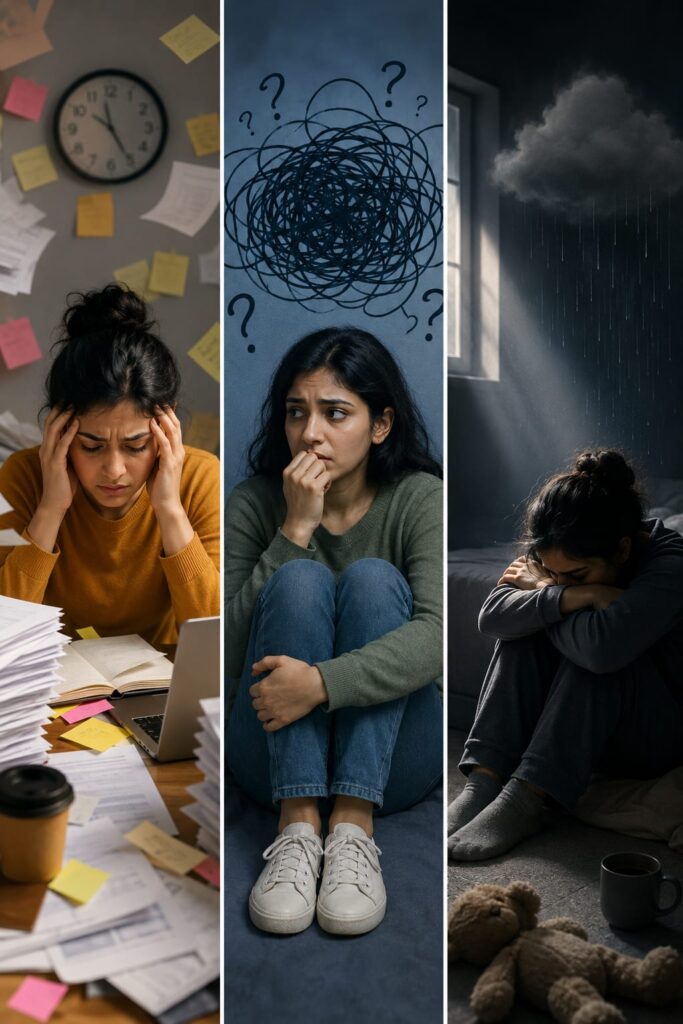
A Real-Life Example: Priya’s Journey
Priya is a 29-year-old software professional who enjoys her work and usually manages challenges well. As an important project deadline approached, she worked longer hours, skipped meals, and slept less than usual. She became irritable, experienced headaches, and felt mentally exhausted.
Once the project ended and she had time to rest, these symptoms gradually improved.
This illustrates a common experience of stress, where the body’s response to pressure often eases after the demanding situation changes.
Several months later, Priya noticed that she was worrying almost every day. She worried about work performance, family finances, and possible future problems even when everything seemed stable. She struggled to relax and often found herself replaying negative scenarios in her mind.
This pattern is more consistent with anxiety, where excessive or persistent worry may continue beyond an immediate stressor.
As time went on, Priya also stopped enjoying activities she once loved. She declined invitations from friends, lacked motivation, and felt emotionally drained for weeks. Even simple daily tasks seemed difficult.
These persistent changes may be consistent with depression, which can affect mood, interest, energy, and everyday functioning.
What Is Stress?
Stress is the body’s natural response to challenges or demands. Short-term stress can motivate people to meet deadlines or adapt to change, but prolonged stress may affect physical and emotional well-being.
Common signs of stress
- Feeling overwhelmed
- Muscle tension or headaches
- Irritability
- Trouble sleeping
- Difficulty concentrating
- Feeling constantly rushed
What Is Anxiety?
Anxiety involves excessive fear or worry that may continue even when there is no immediate danger. Occasional anxiety is a normal human experience, but persistent anxiety can interfere with everyday activities.
Common signs of anxiety
- Constant worrying
- Restlessness
- Racing thoughts
- Difficulty relaxing
- Sleep disturbances
- Trouble concentrating
What Is Depression?
Depression is more than temporary sadness. It may involve a persistent low mood and/or loss of interest in activities that were once enjoyable, along with changes in thinking, energy, or daily functioning.
Common signs of depression
- Persistent sadness or emptiness
- Loss of interest in hobbies
- Fatigue or low energy
- Changes in sleep or appetite
- Difficulty concentrating
- Reduced motivation
Stress vs Anxiety vs Depression: Key Differences
| Stress | Anxiety | Depression |
|---|---|---|
| Often linked to external pressure | Often involves persistent worry | Often involves prolonged low mood or loss of interest |
| May improve when the challenge ends | May continue without a clear trigger | May affect emotions, motivation, and daily functioning |
| Can cause tension and irritability | Can cause restlessness and racing thoughts | Can cause fatigue and reduced enjoyment |
Can Stress Lead to Anxiety or Depression?
Ongoing stress does not automatically lead to anxiety or depression, but prolonged stress may increase emotional strain for some individuals. Recognizing changes early and using healthy coping strategies may help reduce the impact of long-term stress.
Practical Ways to Manage Stress and Support Mental Well-Being
- Maintain a regular sleep schedule.
- Stay physically active.
- Eat balanced meals and stay hydrated.
- Practice mindfulness or relaxation techniques.
- Stay connected with supportive family and friends.
- Set realistic expectations and healthy boundaries.
- Seek professional guidance if emotional difficulties persist.
When Should You Seek Professional Support?
Consider consulting a qualified mental health professional if:
- Symptoms continue for several weeks.
- Daily responsibilities become difficult to manage.
- Work, education, or relationships are affected.
- Self-care strategies are not improving the situation.
Early support can help individuals better understand their experiences and develop effective coping skills.
Frequently Asked Questions
What is the difference between stress vs anxiety vs depression?
Stress is typically a response to external pressures, anxiety often involves persistent or excessive worry, and depression is commonly associated with a prolonged low mood and/or loss of interest in activities.
Can stress become anxiety?
Some people who experience prolonged stress may also experience anxiety symptoms. However, stress and anxiety are distinct experiences, and one does not automatically lead to the other.
How do I know if I should seek help?
If emotional symptoms persist, interfere with daily life, or cause significant distress, consulting a qualified mental health professional may be beneficial.
Final Thoughts
Understanding stress vs anxiety vs depression can help people recognize emotional challenges earlier and make informed choices about self-care and professional support. Mental health is an important part of overall well-being, and learning the differences between these experiences is a meaningful step toward healthier lives.
Related Reading: Feeling Tired Even When You’re Not Busy?
If you’ve ever wondered why you feel exhausted despite having a relatively easy day, you’re not alone. Mental overload, chronic stress, poor sleep quality, and emotional strain can all contribute to persistent fatigue.
Read our in-depth article:
⚡ Always tired without reason? Discover the possible causes and practical tips to regain your energy:
Why You Feel Tired Even When You’re Not Busy
Understanding the connection between fatigue and mental well-being can help you recognize early warning signs and adopt healthier coping strategies.
Very excellent and comprehensive article which gave clarity on most frequently used situations Stress,Anxiety and depression.
Accordingly suitable medical and remedial steps can be taken by consulting the medical consultants if need be.
Very educative and informative article indeed.
Thank you sir for your valuable comment…